Blyth Heritage Trail Map
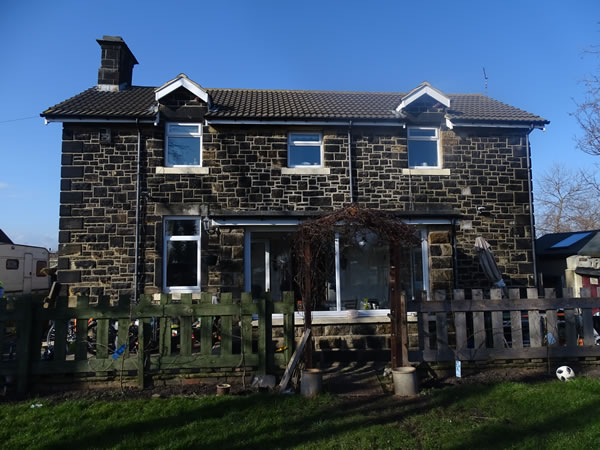
1. Newsham Station House
Links View, Blyth, NE24 4PB
The Newsham Station Building was opened in 1851 and was owned by the Blyth & Tyne Railway Company. It was used for 113 years until eventually being closed to passengers in 1964 and closed completely on 7 June 1965 after the goods traffic stopped. There are indications that the station handled goods and livestock. The railway station served the village of Newsham and was located at the junction of the Percy Main to Blyth and Bedlington lines of the Blyth and Tyne Railway.
2. Bella Reay
Blyth Spartans Clubhouse, Croft Park, Plessey Rd, Northumberland, Blyth NE24 3JE
Bella Reay, daughter of a coal miner was born in Cowpen, Northumberland. During the First World War she worked in a munitions factory as well as playing centre forward for Blyth Spartans and England from 1917–19, scoring an amazing 133 goals in one season. Blyth Spartans had an unbeaten run of 30 matches. They went on to win the Munitionettes Cup in May 1918 with the final being played in front of 8,000 spectators at Ayresome Park. Bella scored 4 of the goals and the final score was 5-0.
Her success was all the more notable as women’s competitive football was controversial at the time. On 6 July 1918 Bella played against Tyneside International for a team called North of England and on 20 July 1918 she played centre forward against a Scottish International Team. The team disbanded during the 1918-1919 season. In 1921 the Football Association banned women’s football in England from using their grounds.
It is worth noting that in 1921 several women’s football matches were organised to help raise funds for miners and their families throughout a coal dispute lasting three months. Bella played for Blyth, Cowpen and Cambois and continued to score goals. Bella married after the war and had a daughter.

3. Cowpen Hall
Blue plaque located on South Bebside Care Home, Patterdale Road. NE24 5JU
Blue plaque located on South Bebside Care Home, Patterdale Road. NE24 5JU
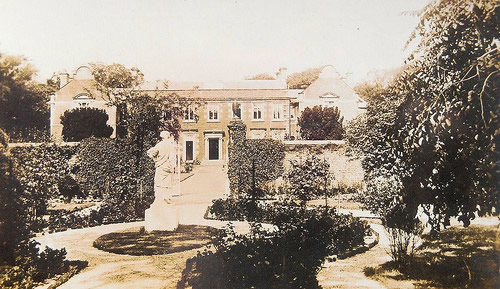
Henry Sidney purchased Cowpen Hall, and some extensive lands in the west part of Cowpen Township from Stephen Mitford in 1729.
He was a barrister.
Henry died childless and bequeathed his Cowpen estate to his brother Laurence's son Marlow. Marlow was the surname of his mother's family and would continue to be used in the Sidney family for generations. Marlow was born in 1708 and died in 1804. He was described as being an eccentric character and also died unmarried and childless. It was believed he used to invest in the smuggling trade which was active in Blyth at this time.
He left his estate to a nephew also named Marlow. The nephew had converted to Catholicism in 1771 while at Cambridge University after he had befriended a Catholic Priest. The Catholic religion was still suppressed at this time and there could be severe penal penalties against those practising the faith. He had to keep his Catholicism hidden especially from his uncle, who had threatened to cut him out of his will without a penny if the rumour he was hearing about his nephew was true. The nephew had also married his cousin while only seventeen years old. Marlow lived at Witham House in Essex with his mother.
On the death of Marlow in 1839 his son, Marlow John Francis Sidney, a solicitor, inherited the estate and moved north to reside in Cowpen. He very soon afterwards built the Catholic church, schools and set about renovating and rebuilding the hall which was in a dilapidated state due to the lack of a resident landholder. He played a prominent role in local affairs as a Justice of the Peace, especially during the miners strike of 1844. The 1851 census lists Marlow JF Sidney Esq living in Cowpen Hall, with a retinue of servants.
Another male Sidney, a barrister, was living in the nearby Cowpen House, which was also a high-status building.
4. Blyth Stationmaster's House
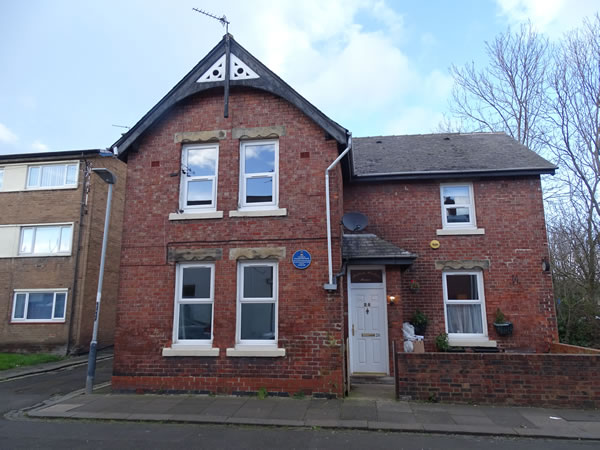
28 Delaval Terrace
This was the site of the Cowpen Lodge which was demolished in 1884. The house was built later that year in preparation for the fourth railway station which was opened in October 1895. It is the only remaining part of Blyth Railway Station.
5. Richard 'Dicky' Fynes
Keel Row Shopping Centre, Blyth, NE24 1AH
Richard Fynes was a leading figure in the town in the latter half of the 19th century and known as the “Father of Drama” in Blyth. It is difficult to sum up in a few lines what his most notable achievements were, and the important contribution that he made to the social development of the Northumberland mining communities.
He may be best remembered for his History of the Miners of Northumberland and Durham, A History of Their Social and Political Progress, published in Blyth in 1873, which is still regarded as classic reference material for those studying the social conditions in the coal mining areas of the two counties. However, it is important not to forget his involvement in the establishment of the Co-operative Movement in the mining communities of Northumberland, the Miners Benevolent Fund and his leading role in establishing the Miners Union in Northumberland. As well as his business activities as an auctioneer he was an impresario and owner of the Theatre Royal on Waterloo Road in Blyth until its destruction by Fire on 11 February 1888.
Richard Fynes made a valuable contribution to the welfare of the people and the town of Blyth, a fact reflected at his funeral in Cowpen Cemetery. People travelled from far afield and special trains were laid on to bring mourners from Newcastle and throughout the counties of Northumberland and Durham. According to reports in the local press the numbers of mourners could be counted in their thousands; as many as 9,000 were reputed to form part of the cortege and line the streets. In recognition of his important contribution to the local community, and to the mining communities in particular, a memorial was erected over his grave in Cowpen Cemetery.
6. Blyth’s First Theatre
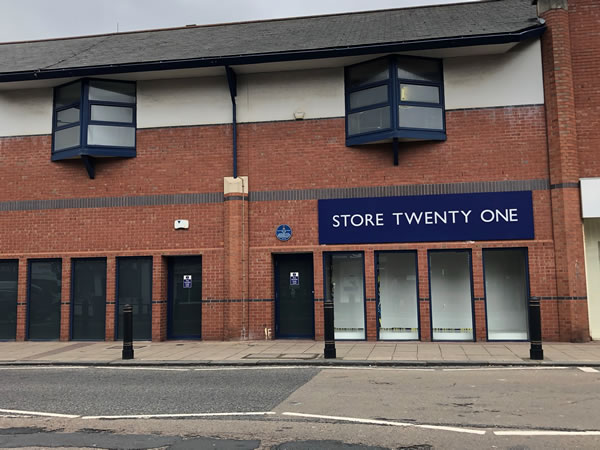
Keel Row Shopping Centre, Blyth, NE24 1AH
The first theatre in Blyth was situated on Waterloo Road. It opened in 1870 and was run by Richard Fynes. The theatre was described as one of the largest in the region and could accommodate an audience of 2,500. It was destroyed by fire in 1888. A second Theatre Royal was also run by Richard Fynes and build on the site of the first. It opened in November 1888.
7. Site of Blyth’s Original Railway Station
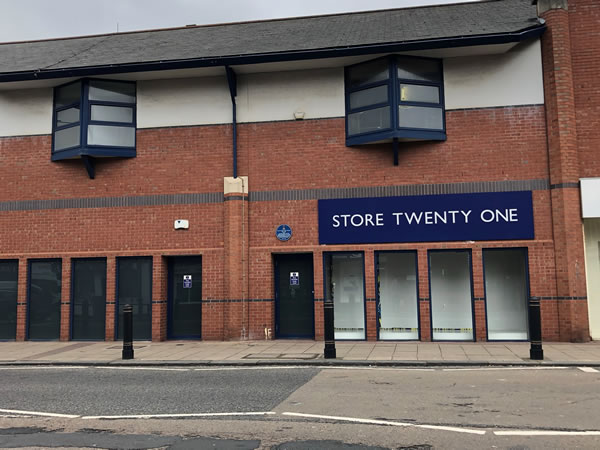
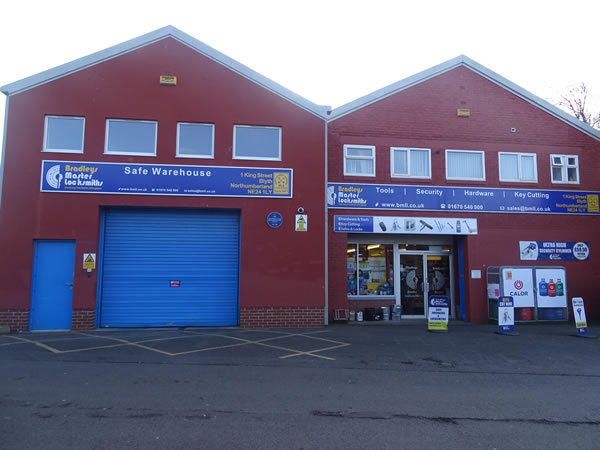
Bradleys Master Locksmiths, King Street, Blyth, Northumberland, NE24 1LY
The first Railway Station in Blyth (The Blyth, Seghill and Percy Main Railway) was opened on 3 March 1847 and stood on the site of Bradleys Master Locksmiths in King Street, Blyth (formerly Croft Street).
It closed on 1 May 1867 when the Second station opened.
On 1 May 1867 a new station was opened to replace the original station. It was on the site now occupied by Morrisons supermarket and the community hospital. There were four railway stations in Blyth, the first being beside the Top House in Marlow Street and the 2nd in what is now King Street.
8. Bob Elliott
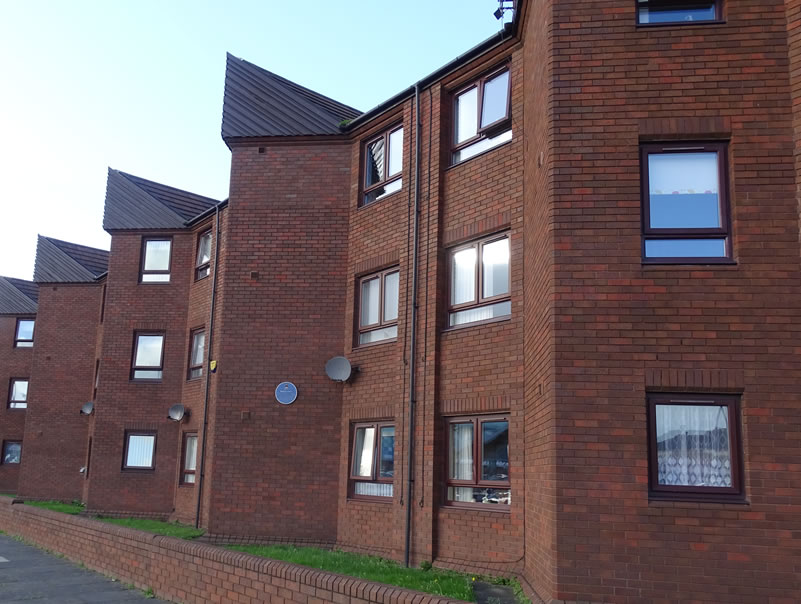
Blue plaque on Bob Elliott House, Wright Street, Blyth, NE24 1HB
Blue plaque on Bob Elliott House, Wright Street, Blyth, NE24 1HB
Bob Elliot was an unemployed miner and prominent member of the National Unemployed Workers Movement (NUWM).
In 1931 he was elected as the Communist Councillor for Croft ward on Blyth Council and was re-elected as a Communist Councillor in 1937.
Bob joined the British Battalion of the International Brigade to fight fascism in Spain and became political commissar, being renowned as a stern disciplinarian. He died of wounds received fighting Franco’s fascists at Villainous during the Battle of Brunete in July 1937.
9. Blyth Shipbuilding and Dry Docks Company
Offshore House, Albert Street, Blyth, NE24 1LZ
Shipbuilding began on the site on the south bank of the River Blyth in 1811. In the 1840s the yard was purchased by Beaumont and Drummond. In 1863 the yard was taken over by Hodgson and Soulsby who repaired and built small wooden sailing ships.
In 1880 the first two iron ships were built at Blyth for the Russian Government.
On 2 March 1883 the Blyth Shipbuilding & Dry Docks Company Ltd. was registered as a limited liability company. It built cargo liners, tramp steamers and colliers. The fifth ship built at the yard was for the shipping company Stephens and Mawson of Newcastle.
In 1914 a cargo ship under construction was purchased by the Admiralty and converted into the Navy's first seaplane carrier Ark Royal and served throughout World War 1.
The yard closed in 1925, reopening in 1926 only to close again in 1930.
In mid-1937 the yard was reopened under its original name. During World War II the Blyth company built five River class and two Bay-class frigates, seven Castle-class corvettes, as well as two Flower-class corvettes and ten Bangor-class minesweepers.
The former German cargo ship Hannover was also converted into the escort carrier Audacity.
Unfortunately, with rising costs and falling orders, the yard was finally closed in 1967. Repair work and shipbreaking was then carried out by various companies on the site. Eventually some of the shipbuilding berths were demolished to make room for a paper and timber storage area for the Port of Blyth.
10. Site of the Salt Pans
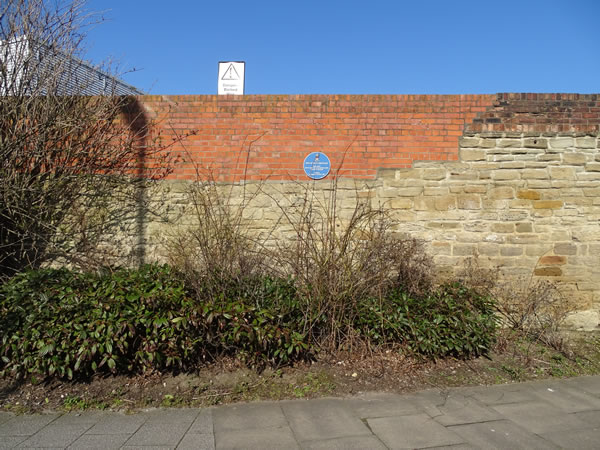
Arms Evertyne House, Quay Road, Blyth, NE24 2AS
There were 14 salt pans producing more than 1,000 tons of salt for export each year. Salt pans are created when pools of seawater evaporated at a rate faster than it is replenished by rainfall. As the water evaporates it leaves behind the minerals precipitated from the salt ions dissolved in the water.
Early salt pans were made of lead and quite small, however, they later became larger and were made of iron.
The making of salt in the 18th century was dogged by taxation. The taxation increased during the Napoleonic wars to provide funds for the military. This was abolished in 1825, however, the salt industry was in decline.
The last salt pan was destroyed in 1876 and the industry ceased.
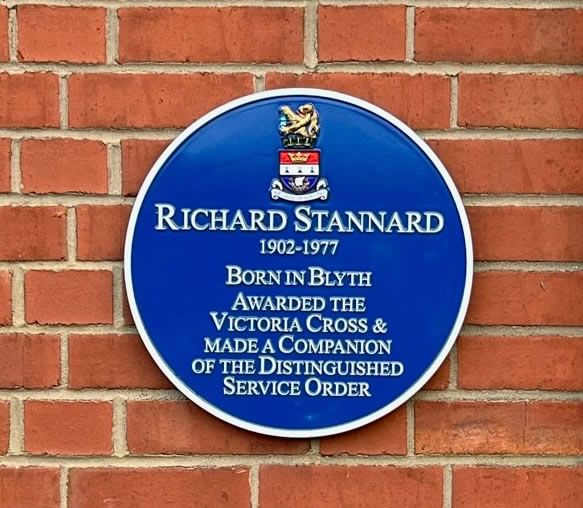
11. Richard Stannard
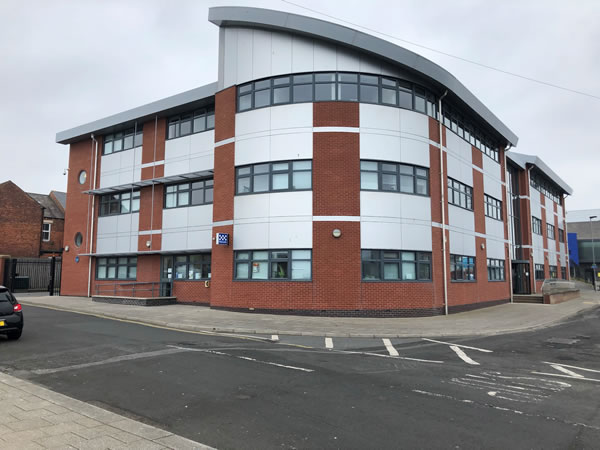
Richard Stannard House, 40 Bridge St, Blyth NE24 2AG
Richard Been Stannard (1902-1977) lived in Cowpen Quay, Blyth. In February 1912 his father George, died when his ship, the Mount Oswald, was lost with all hands on a voyage from Baltimore, USA. Richard was educated at the Royal naval Merchant School for orphans of merchant seamen.
Richard went to sea as an apprentice in 1918 and was promoted to Lieutenant in 1932. He married Phyllis May (nee Tomkin) in 1928 and they had two daughters.
He was awarded the Victoria Cross for his command of the Armed trawler HMS Arab at Namsos, Norway between 28 April and 2 May 1940 when his vessel was subject to 31 bombing attacks.
When Namsos jetty was hit and ammunition set on fire, Stannard ran Arab's bows against the wharf and endeavoured for two hours to extinguish the fire with hoses from the forecastle. He succeeded in saving a part of the jetty which was invaluable in the evacuation of Namsos.
He established an armed camp under shelter of a cliff where off duty seamen could rest with safety. When another trawler was hit and about to blow up, he with two others boarded Arab and moved her 100 yards to safety. When leaving the fjord Arab was attacked by a German bomber which ordered him to steer east or be sunk. He kept on his course, held his fire till the enemy was within 800 yards and then shot the aircraft down. Stannard sailed his ship with damaged rudder and propeller and cracked main engine castings back to England.
12. Doctor Gilbert Ward 3 March 1805 – 17 May 1894
Frameworks, 24 Bridge St, Blyth NE24 2BP
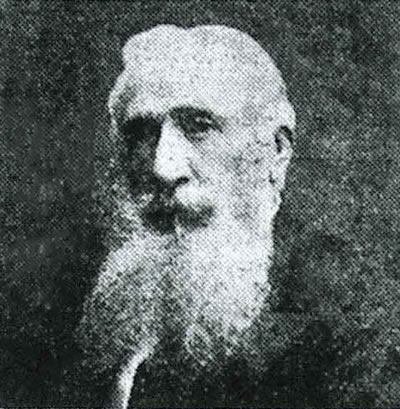
Dr Ward practiced in Blyth and held the position of Registrars of Births, Marriages and Deaths for 55 years. He was also a surgeon to the coastguard as well as the Royal Naval volunteers, Public Vaccinator and Certifying Factory Surgeon. Dr Ward was provided with a rent-free cottage to use as a hospital from Lord Ridley, to help isolate infectious patients, especially those that arrived at the port from various ships with diseases such as typhus. He also had a medical practice in Bridge Street which is now the site of the bus depot.
He started the fund to raise money to build the Blyth Memorial Hospital and presented the key to the new building to Lady Ridley who opened the hospital on 28 December 1887.
Dr Ward lived in the Bridge Street area for many years.
Dr Gilbert Ward, about the year 1877, also did the honour of receiving & entertaining the Duke of Edinburgh, Queen Victoria’s sailor son when he paid a visit to Blyth, in the course of his duties as an Admiral of the British Navy. His flagship anchored off Blyth, he entered the river in a naval cutter & landed at the Low Quay steps. Dr Gilbert Ward was there to receive him & drove with him to his home in Bridge Street & I dare say offered him some refreshment. The Duke conversed with Mr Redmond, Chief Officer of the Coastguards at Blyth. His staff would form a guard of Honour. The Duke, also inspected their watch house & their dwelling houses.
13. Aaron Walton
Blyth Library Building, Bridge Street, Blyth NE24 1DJ
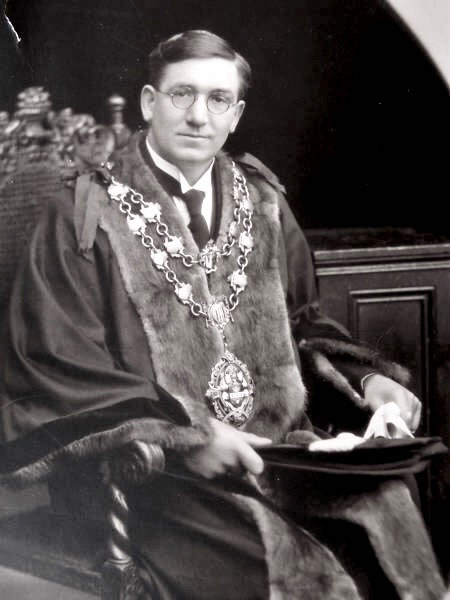
Aaron Walton was born on 4 January 1886. He began working in the mines as a putter at 15 years of age. He attended Ruskin College, financed by the Trade Union and returned to Blyth to work as a Shipping Superintendent. When he married Aaron was working as hewer and living on Newsham Road with his wife and three children.
Aaron was Mayor of Blyth on 11 occasions, Chairman of Blyth Library, Councillor and Alderman given the Honorary Freedom of the Borough in 1960, Blyth Spartans Club President.
Aaron died on 7 November 1967 at his home in Marine Terrace. The headline in the Newcastle Evening Chronicle stated “Mr Blyth dies”.
14. First World War Thomas Knight Memorial Hospital
Thomas Knight Home, 1 Beaconsfield Street, Blyth, NE24 2DN
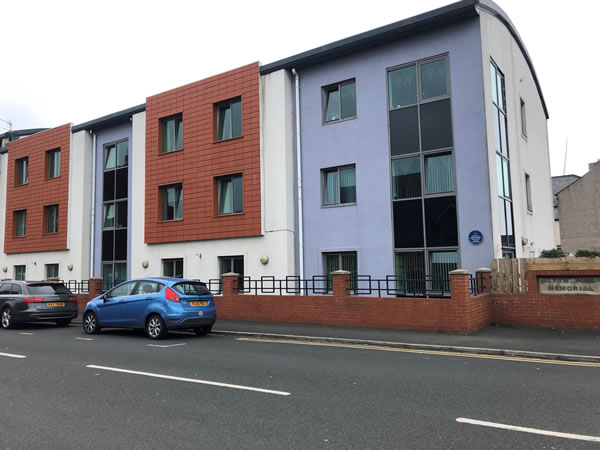
Thomas Knight was a ship-owner whose bequest laid the foundations of a hospital in Blyth (the Thomas Knight Memorial Hospital). The hospital was opened in 1887 by Lady Ridley). He was a generous contributor to all charitable movements in the area.
Following the death of Thomas and his wife, it was discovered that a large amount of money had been left for the founding of a hospital. Dr Gilbert Ward presented the key to Lady Ridley and asked her to open the hospital. Dr Ward was a key factor in the provision of health services in Blyth and held the position of Registrar of Births, Marriages and Deaths in Blyth.
Thomas started his working life as a seaman in 1818 and became one of the wealthiest ship-owners of the port.
There is a monument to Thomas Knight in Horton Churchyard, Blyth. He died on 28 March 1878 at Crofton.
The Thomas Knight Care Home stands on the site of the hospital.
15. Willie Carr
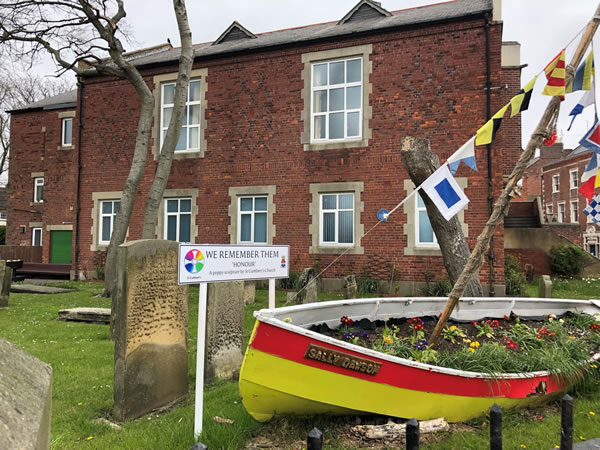
St Cuthbert’s Church, 27 Wellington Street, Blyth, NE24 3BE
Willie Carr was known as a gentle giant. He was born on 3 April 1756 at a hamlet near Old Hartley and moved to Blyth at a young age.
His father was a master blacksmith, and Willie became his apprentice when he was 11. As an adult, he was rumoured to be the strongest man not just in Britain, but the whole world. At the age of 17, Willie was almost 6’ 4” tall and weighed almost 18 stone.
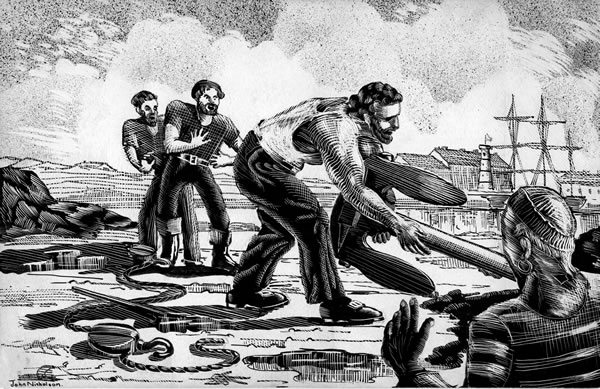
At the end of the 18th century, press gangs used to go around looking for men they could capture and force to join the navy. Many times they tried to catch Willie, but each time they were overpowered.
Obsessed with the idea of taking him, one day, they set a trap and got him in a boat at Blyth harbour. During the journey to their tender, Willie asked the boat’s coxswain if he could swim. When he asked why, Willie replied: “because we shall all be swimming in a moment.” Willie placed his legs on one side of the boat and his back on the other and pushed so hard he cracked the boat almost in two.
The crew were left spluttering around in the water and Willie swam back to dry land. They never bothered him again.
Lord Delaval often invited Willie to Seaton Delaval Hall to demonstrate his astonishing strength for his guests. On one occasion he drank 84 glasses of gin and was still quite sober when he returned home. He could work for long hours without a break; he once worked for 132 consecutive hours, slept for 12 hours then worked for a further 120 hours. There are many famous tales of Willie’s amazing strength. A bronze statue of Willie stands in the Keel Row Shopping Centre in Blyth.
He died on September 6, 1825, aged 69, after spending seven years crippled by rheumatism, he may be buried in St Cuthbert's but this has never been proved up to now.

16. Blyth’s First Chapel of Ease
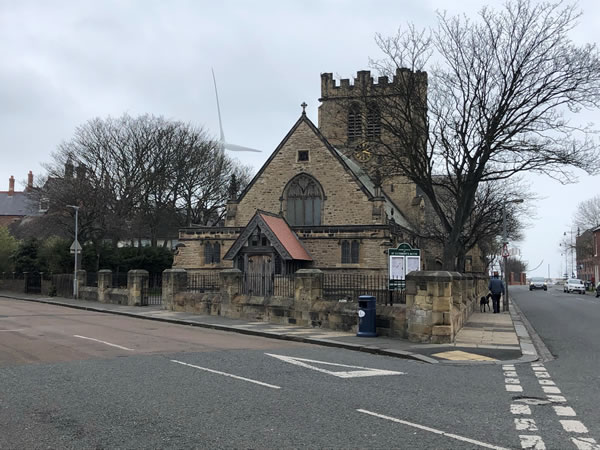
St Cuthbert’s Church, 27 Wellington Street, Blyth, NE24 3BE
The first Blyth Church - the Chapel of Ease was built in 1751. John Wallace, a Blyth historian, could find no evidence of any place of worship in Blyth before this date.
Blyth belonged to the parish of Earsdon however pastors at Earsdon were few and far between. The Ridley family decided to build a Chapel of Ease at Blyth to ease the parish of Earsdon.
It was a small church built for a congregation of 500. It consisted of a nave and chancel, with a small belcote at the West end. As the town developed, 2 galleries were built (one was later removed). The church was never consecrated. The Ridley family retained freehold and the right to appoint chaplains.
When the new church was built, Sir Matthew White Ridley gave the Chapel of Ease to the Diocesan Society who held it "on trust". It was thoroughly overhauled and was described as "one of the most graceful looking halls in the town". In 1925, it was pulled down to make way for a new Parish Hall, built on the site. The brick arch at the entrance to the Parish Hall has a keystone of stone with 1751 engraved on it. This stone was the keystone of the arch at the entrance of the old church, and so was preserved in this way. A chalice, first used in the old church in 1754, is still on exhibition in the new church.
17. George Skee
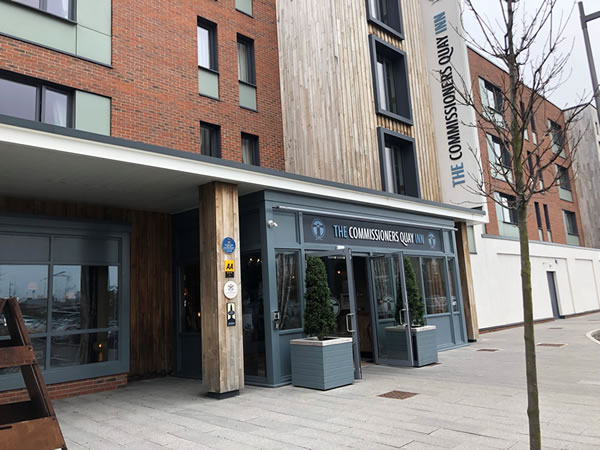
The Commissioners Quay Inn, Quay Road, Blyth, NE24 3AF
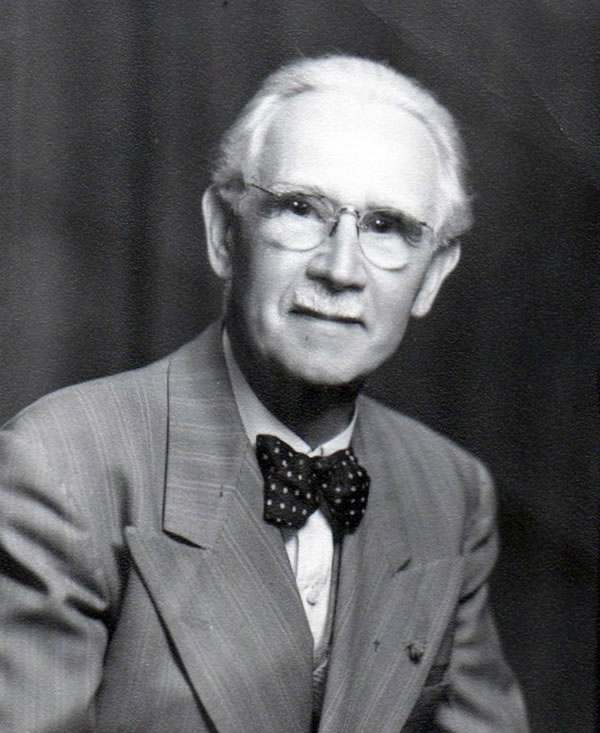
George Skee was born in Blyth in 1884 and lived at 5 Seaview, the site of Blyth Workspace. At the age of 12 he became an apprentice shipwright with the Blyth Shipbuilding Company and also took a part time course in naval architecture.
He was commissioned by the second Viscount Ridley to make a carving of his father, the first Viscount Ridley. From this a bronze head was cast and erected on a plinth in Ridley Park where it remained for 99 years until it was stolen in 2009.
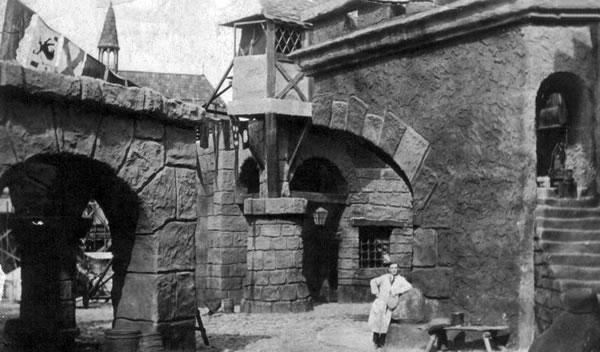
George Skee opened the Newsham Pottery where he worked until joining the armed forces. After demobilisation he moved to California. For his first film, The Hunchback of Notre Dame, he made models of 28 Kings and Queens as well as creating miniature gargoyles. His biggest challenge was in 1925 when he was commissioned to make a 60 foot skeleton of a prehistoric monster for the film “The Lost World”.
From 1930 to 1950 George worked primarily as a pottery designer and in 2003 some of his pottery was exhibited in the Gene Autry Museum in California.
George Skee died at his home in Los Angeles on 22 May 1964.
18. Captain William Smith
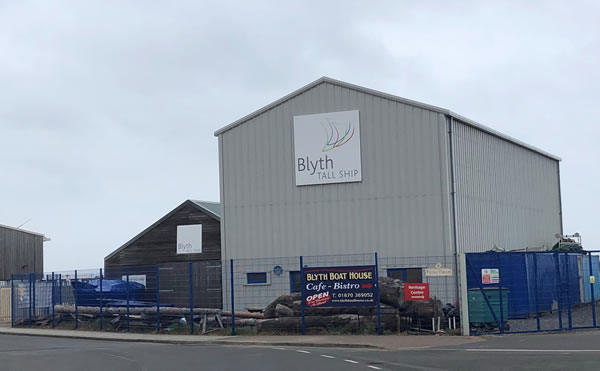
Blyth Tall Ship, Apprentice Workshop, Quayside, South Harbour, Blyth, Northumberland, NE24 3PA
Captain William Smith was born in Blyth (Seaton Sluice) on 11 October 1790 and educated in Blyth. He was apprenticed to the sea when he was 14 years old and spent most of it on the east coast coal trade, long regarded as being one of the best training grounds for seamen.
He came out of his time (apprenticeship) on 2 August 1811 and, in the following months, was owner and master of the "Three Friends of Blakeney" which shipped coal on the east coast.
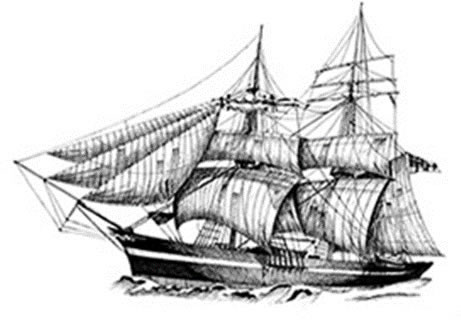
He became part-owner of a new ship being built at the shipyard of Alexander and John Davidson in Blyth, the brig "Williams".
In 1819, while sailing cargo on the Williams from Buenos Aires to Valparaiso in Chile, Smith unusually decided to bear south and west, a higher latitude than normal to round the Cape Horn, in an attempt to catch the right wind. On 19 February he spotted the new land from his position at 62° south latitude, 58° west longitude but did not land on it.
The naval authorities did not believe his discovery. His second attempt to reach the new land in June 1819 was unsuccessful. On his third voyage in October 1819, he made a sketch chart of the islands and landed on the largest. He named the island "King George Island" and the archipelago the "South Shetland Islands" in honour of the Shetland Island off the north of Scotland.
At the beginning of the following year, 1820, the Williams was chartered by the Royal Navy and dispatched with Smith and Lieutenant Edward Bransfield on board to survey and make better charts of the newly discovered islands.
The "Antarctic Peninsula" was discovered in the process.
19. Fred Stoker
13 Bath Terrace, Blyth, NE24 3AX
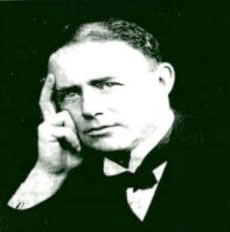
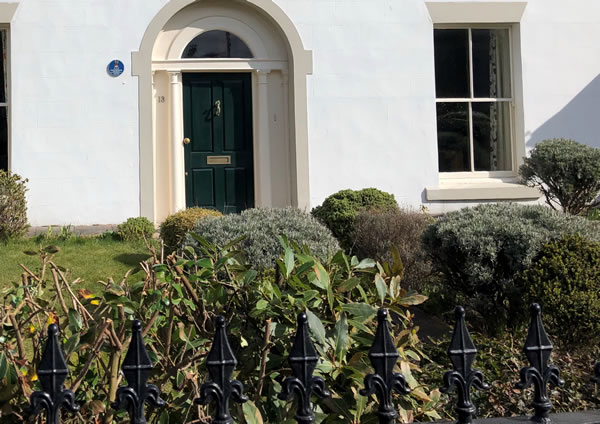
Fred Stoker lived at 13 Bath Terrace with his parents and it was in that house that he held the first ever meeting of the Blyth Spartans (September 1899). At the age of 21, he was the club’s first secretary. Mr Stoker is credited with naming the team after the Greek Spartan army. He was also a physician in Harley Street, London, as well as an expert horticulturist.
The 1901 census shows the family were still at 13 Bath Terrace and the 23-year-old Fred is recorded as a ’Student of Medicine’, his naming of the club proved he was a learned person and he was studying at Kings College, which is now The University of Newcastle.
One, or if not his last involvement with the club was a Testimonial Presentation to player and captain, George C Robertson on 5 December 1903. In 1904, Fred was listed in the General Medical Register as Surgeon at Durham University where he graduated the same year. He moved to Edinburgh to take up a position at the Royal College of Surgeons and married his wife, Mary Wilkie Smith in 1906. In the following year, 1907 Fred, aged 27, became of Fellow of the Royal College of Surgeons in Edinburgh which was quite an achievement for someone so young.
Fred took up a consulting room in the Harley Street area after spending 14 years in general practice. He and his wife developed a love of gardening.
In 1918 he was elected a Fellow of the Linnean Society of London, which is the world’s oldest active biological society. He applied his scientific mind to gardening and the problems of cultivating. In 1924 the Stokers moved to live in Loughton, in the centre of Epping Forest, living in Oak Lodge which had an acre of garden and faced the forest.
Fred Stoker died on 20th July 1943 aged only 65, his will described him as: “A retired surgeon and horticulturist/botanist” he left an estate valued at £17,297.
Despite dying at such a young age Fred had certainly packed a lot into his 65 years of life from such humble beginnings in Bath Terrace Blyth to an award-winning estate in the Epping Forest, many obituaries written about him all spoke of Fred as a kind man whose enthusiasm was infectious to all who came in contact with him and his garden at The Summit had become a centre for all keen gardeners both amateur & professional.
Following his death Mary continued to live at The Summit and looked after the garden for another 20 years, she died in 1964 and under the terms of her will she left her late husband’s vast library of botanical & horticultural books to the Royal Horticultural Society.
20. Elfin Submarine Base
Port of Blyth, South Harbour, Blyth, NE24 3PB
Please note the Blue Plaque is currently unavailable to view due to ongoing construction of where it is located.
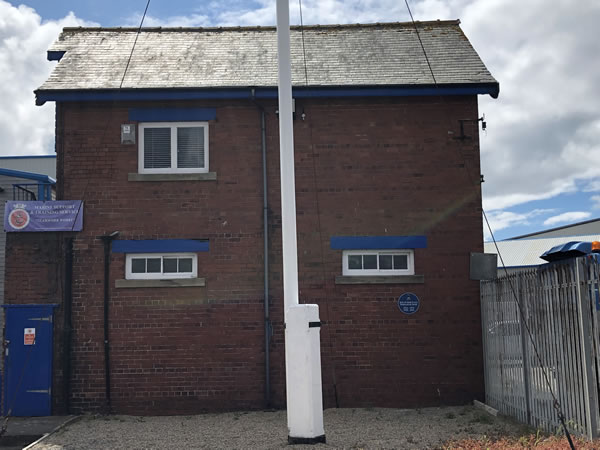
The Elfin Submarine Base was Blyth’s submarine base during the first and second world wars (from 1916-1919 and 1939-1945). Northumberland trainee submariners learned their trade in the engine room of a training submarine. HMS Elfin, a torpedo recovery vessel built for the Royal Navy operated during the Second World War and in 1940 she was transferred to Blyth to become the depot ship for the 6th Submarine Flotilla, sharing her name with the submarine base.
It is known that Wrens served at HMS Elfin base during the Second World War, however, none were based on submarines as women were not allowed to serve in an active role. The Wrens produced a newspaper, Elfin Echoes, which was circulated around the base and submarine crews. A copy of the magazine is in the Imperial War Museum.
There is a submarine memorial on Elfin Way, near St Mary’s Church.
21. Lightship LV50
Royal Northumberland Yacht Club, South Harbour, Blyth, NE24 3PB
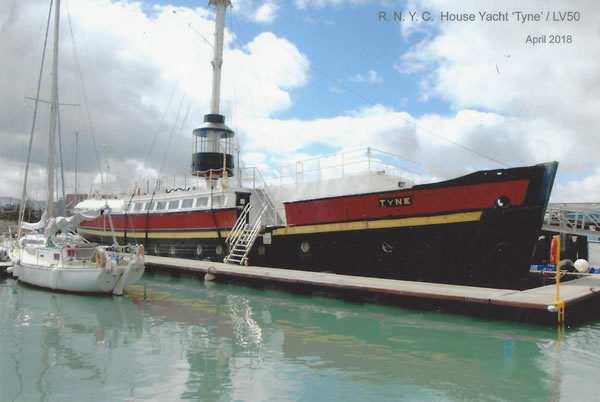
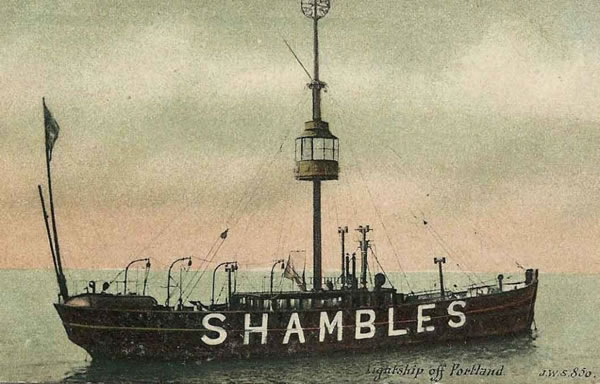
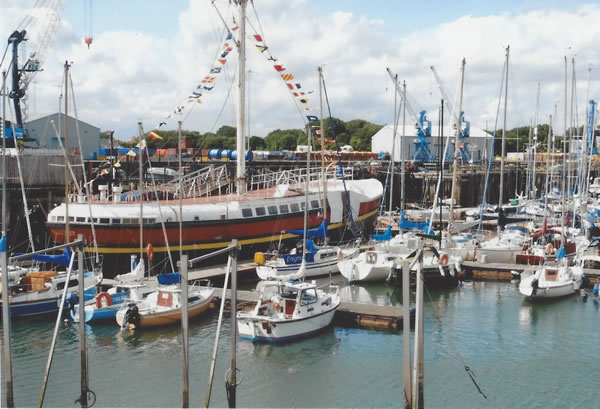
The Lightship LV50 was designed by Bernard Waymouth and built in 1879 by Fletcher Son and Fearnall at the Union Dock, London. It is one of only three floating timber light vessels left in Great Britain. The National Historic Ships UK register her as being of National Importance, Certificate Number 141.
After 73 years of service, repairs and refits the LV50 was decommissioned and moved to a breakers yard in Harwich. In 1952 the Royal Northumberland Yacht Club towed her to Blyth to become the third vessel to serve as the club’s house yacht. In July 1954 the ship was opened for use by club members in time for the Blyth Regatta. In 1955 she was re-ballasted with 6 tons of granite blocks (from Northumberland Street in Newcastle), 1956 the new deckhouse extension was installed and in 1957 the ‘Penthouse’ was constructed, raising the cadet’s quarters, above the steward’s quarters, by 15”.
Inside there is a bar, a saloon and a galley able to serve up an a la-carte menu to members at the many functions which take place on board. There is a race office as well as toilets and showers on the upper decks.
22. Royal Warwickshire Regiment
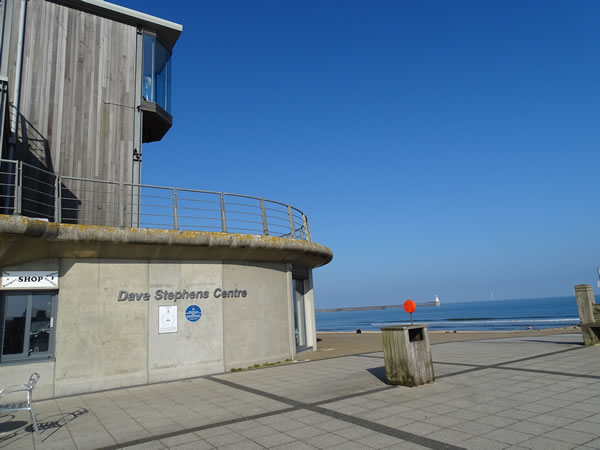
Dave Stephens Centre, Links Road, Blyth, NE24 3PL
On 24 August 1917 600 trainee soldiers were on a route march. As it was a very hot day the commanding officer allowed the men to go for a swim at Blyth beach. Many of the soldiers were non-swimmers and some had never seen the sea.
The ebb tide was running and there were strong undercurrents which cause many of the men to get into difficulties in the water.
Lt Brown organised chains of men to help their comrades to safety. He and a Sergeant Riley also went into the sea to assist those who were struggling.
Lt Brown was swept out to sea and drown alongside eight other soldiers. His body was recovered on 6 September and he is buried in the churchyard of St Mary’s, Horton.
Most of the bodies were returned to their relatives in the Midlands. An inquest noted a total lack of swimming experience amongst the men.
23. Blyth Battery
Blyth NE24 3PQ
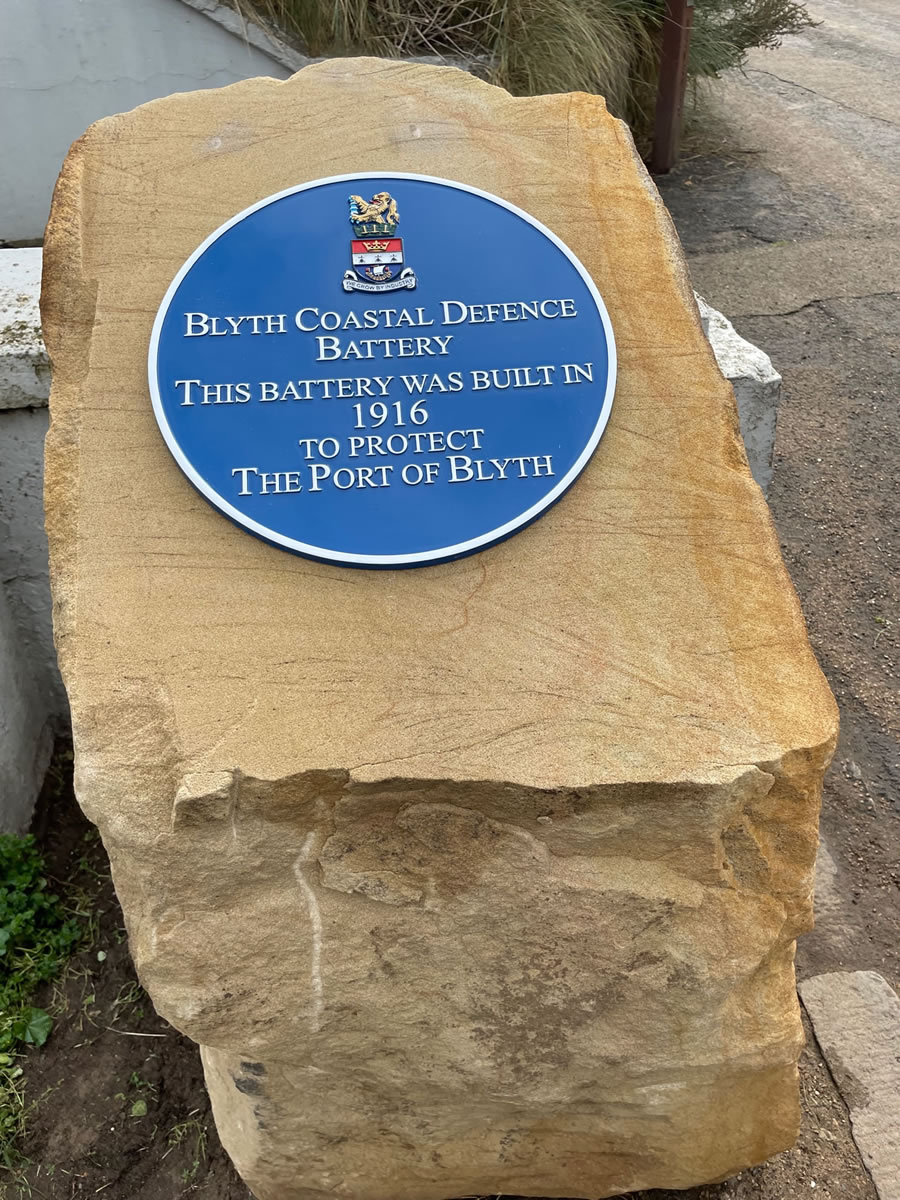
Blyth Battery is the remnants of a World War One coastal artillery battery that was upgraded and re-fitted for use in World War Two. It is the most intact and accessible coastal defence battery left on the North East and Yorkshire coastline. The World War I battery at Blyth is in excellent condition and retains the full range of features that are characteristic of a "Defended Port Battery".
Created in response to the December 1914 German bombardment of Hartlepool, and concerns of further attacks against the eastern coastline - it was erected in August 1916, by the Durham Fortress Engineers RE.
Its original purpose was to prevent landings by the German High Seas Fleet and to engage motor torpedo boats, but by the time of completion, it was also given responsibility for protecting the submarine depot ship Titania.
During World War I, the Battery was manned by seventy-five men and four officers, who oversaw the operation of two six-inch quick-firing guns and two searchlights.
Originally named Seaton Battery, it spanned the length of what is now the promenade at Blyth Beach and included several temporary and permanent enclosures, two of which post-war were converted to public toilets.
In February 1940, the Battery was re-excavated, renamed Blyth Battery and within a month it was ready to protect the coast with two gun emplacements fitted with two six-inch BL MK.7 guns. Manned by 110 men and five officers from the 510 Coast Regiment (T.A.) and later the Home Guard, the 23 foot long guns had a range of 7 miles. It was placed in care and maintenance in November 1944. Seaward facing, each emplacement is fronted by a sloping apron of reinforced concrete.
Several names have been used to reference the site throughout the century, including "Link House Battery" due to its location, and "Coulson Battery" after the RE Officer responsible for its construction. Since 1940, thankfully, it has affectionally retained its official title of Blyth Battery and fortunately today due to the dedication of countless volunteers it lives on as a historical monument and a carefully run museum.
Today the two gun emplacements, the engine house, its outbuilding and enclosing walls are listed Grade II.
This Battery has been identified as one of only 28 examples of its type in England which have survived in a complete state. The fact that it was reused during World War II when some alterations were made, and a new Battery Observation post was constructed, adds to the importance of the monument as a whole.
Blyth Battery is a volunteer run museum with 30 members.
Blyth Battery also runs several family and open day events throughout the year including re-enactment events.